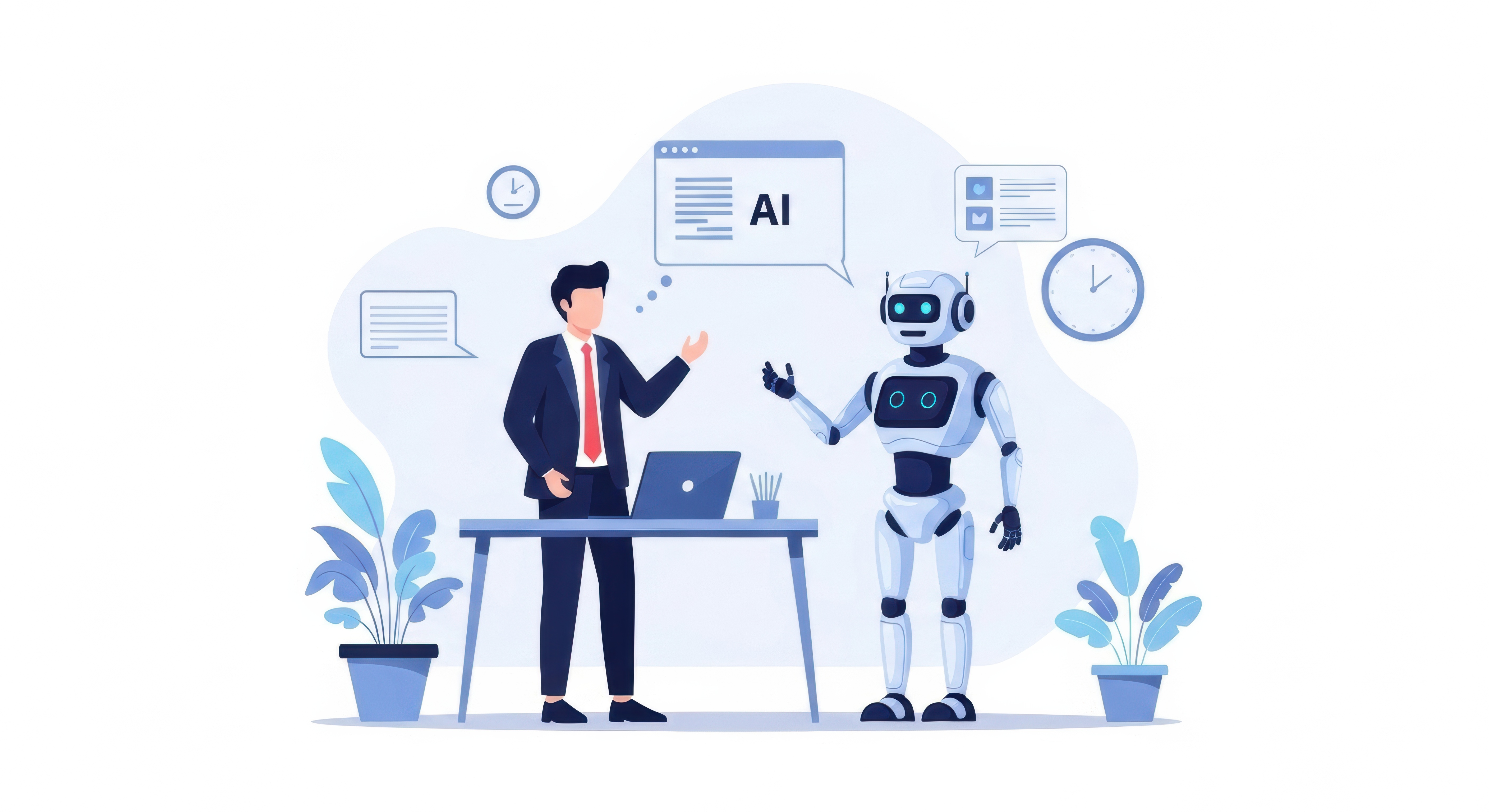
The class of 2026 won’t remember a time before smartphones. Many have never written an essay, solved a complex problem, or prepared for an interview without some form of AI assistance. This isn’t a failure of education; it’s an evolution of capability. For HR professionals and hiring managers, this shift demands a fundamental rethink: not of whether to allow AI in the workplace, but of how to build organisations where humans and AI work together effectively.
AI Literacy Is Now Basic Literacy
For many new graduates, using tools like ChatGPT, Microsoft Copilot, or Claude is as unremarkable as using a search engine. They don’t think of it as “using AI.” They think of it as working. Policies that treat AI assistance with suspicion, or demand disclosure of every AI-assisted task, risk alienating precisely the candidates organisations most want to attract.
The more productive approach is to shift focus from how work is done to the quality of what’s produced. Forward-thinking employers are already building AI capability into job descriptions and designing onboarding processes that establish shared norms from day one.
The Judgement Gap
Familiarity with AI tools doesn’t automatically confer wisdom about when and how to deploy them. Young professionals who’ve grown up with generative AI often lack the experience to recognise its limitations: the hallucinations, the confidentiality risks of feeding sensitive data into third-party systems, the moments when a task demands human reasoning rather than AI polish.
Employers have a crucial role here. The University of Southampton recently became the first UK university to embed AI literacy into every degree programme, pairing tool fluency with critical thinking and bias detection. HR teams would do well to take a similar approach with new recruits.
Rethinking Productivity — and Protecting the Capacity to Think
If AI delivers the efficiency gains its proponents claim, organisations face an uncomfortable question: what happens to the time saved? Piling on more tasks virtually guarantees that workers will hide their efficiency gains. The wiser response is to measure outcomes rather than hours, rewarding impact rather than visible effort and creating space for the higher-order work AI can’t do: relationship-building, creative problem-solving, strategic thinking.
At the same time, over-reliance on AI can quietly weaken the very capabilities that make human workers valuable. Thoughtful employers are experimenting with “no-AI zones”: strategy sessions, ethical decisions, early-stage ideation and encouraging employees to develop initial ideas before turning to AI for refinement. The goal is balance: AI should augment human capability, not replace the cognitive muscles that capability depends on.
Rules That Enable Rather Than Restrict
Policy is where many organisations stumble. The instinct to restrict (long lists of prohibited uses, mandatory disclosure requirements) frequently proves counterproductive. Policies that feel like crackdowns drive AI use underground. More effective are frameworks that feel enabling: clear guidance on appropriate use, transparency expectations that treat disclosure as a professional norm, and regular updates as tools evolve.
Crucially, involve employees in policy development. Younger workers often have more practical experience with AI tools than their managers. Their input makes policies more realistic and their buy-in makes those policies more likely to be followed.
The Bottom Line
Within a few years, distinguishing between “AI-using” and “non-AI-using” employees will make as little sense as distinguishing between those who use email and those who don’t. The employers who thrive will treat AI like electricity: essential infrastructure, best used by people who understand its properties and respect its risks. They’ll hire for judgement as much as technical skill, measure outcomes rather than inputs, and build cultures where efficiency is rewarded and human thinking is protected.
The AI-native generation is arriving. The question isn’t whether they’ll bring AI with them. It’s whether your organisation is ready to make the most of what they offer.
At HR Now we have developed a set of practical and pragmatic guidelines for employers who want to embrace technology while maintaining essential internal controls. Give us a call to find out more and look out for our workshops on this subject.